Book II: The Scrolls of Lemuria
Chapter 6: The Fall of Atlantis
While the Amorosi sang to the ancient trees of the central forests, the Atlanteans became the sovereigns of the Great Ring—that vast, shimmering expanse of ocean that encircles our flat world, stretching out toward the silent white sentinel of the Mylar’s Ice Wall.
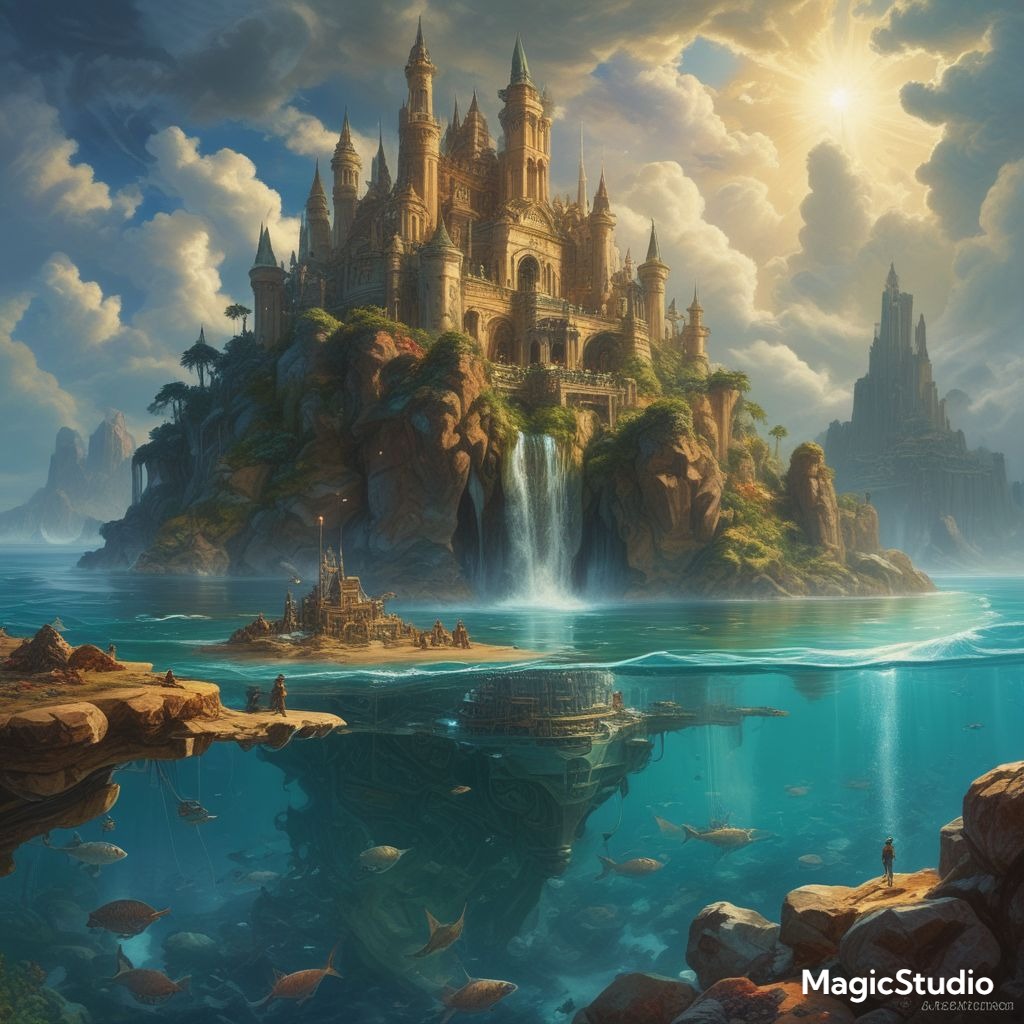
Their crowning jewel was Atlantis, a city-metropolis that seemed to defy the physical laws of the Middle Plane. It was a marvel of white marble and cerulean glass, a floating mountain that sat half-kissed by the sun-luminary and half-embraced by the crushing depths of the abyss. It was not merely a city; it was a living, breathing Star Fort of the Tides, anchored to the floor of the world by massive, silver-veined roots that were connected to the primal essence of Gaia herself.
It was hard to say just how big it was – some legends claim it was a large island, others a mini continent. Surrounded by concentric rings of water and land, Atlantis became the very heart of their civilization and the seat of their power.
But it wasn’t always that way.
You must understand the state of the Flat Earth at this time. The First Great [Mud] Flood had already done its work, turning the utopia of the Mylars into a landscape of grey, suffocating silt. The little people had fled behind their Ice Wall, and the world was quiet, drowning in the aftermath of my first “Reset.”
From out of this world of ruins and rising tides a new leader of the Atlanteans emerged – Kaelin. It was he who turned Atlantis from a small kingdom into the envy of the entire world. It was he who saw the half-buried Star Forts inspired by the Mylars and decided he could weave them back together into something “new.” He didn’t just build Atlantis; he exhumed the original version of the city from the mud and draped it in the finery of his own arrogant race to turn it into a masterpiece.
A Floating Metropolis
Ah, the tragedy of Kaelin. It is a tale of marble, mist, and the magnificent stupidity of those who think they can outwit the gods.
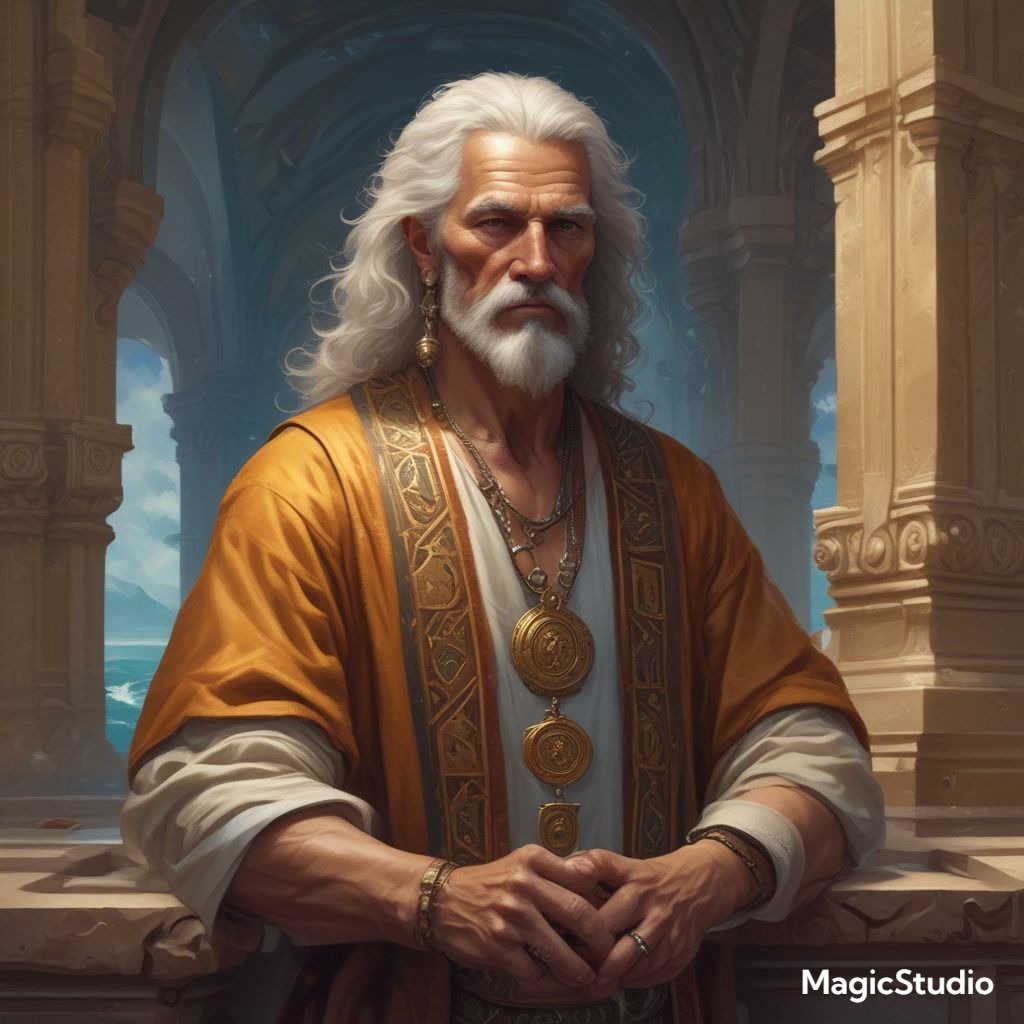
Kaelin understood the “Flat Plane” better than most. He knew that the waters of the great oceans weren’t inert liquids, but instead a conductor. His new Atlantis was designed of alternating land and water in a series of floating rings which acted as a massive induction coil. By pulsing the frequency of the Flat Earth through these rings, Kaelin made the city buoyant. Atlantis didn’t just float; it was held in a state of perpetual balance of buoyancy vs density. It was partly above the surface and partly below, a shimmering jewel for all to see.
Atlantean history claims that Kaeliin’s work combined the flowing, organic beauty of water with the geometric precision of Mylars. Perhaps the most famous of his designs were the Crystal Aqueducts of Atlantis. Forget your lead pipes and stone gutters; these were translucent ribbons of “living glass” that snaked through the city like the veins of a god. The water within them didn’t just flow—it glowed with a rhythmic, pulsing light that shifted from violet to gold.
This was the “Vril-blood” of Atlantis. Inspired by Amorosi texts about the Mylars, Kaelin learned how to harvest the invisible fire of the atmosphere into his aqueducts. They carried the “Breath of the Firmament” into every home in Atlantis, lighting the streets with a sun-like brilliance even when the luminaries had moved beyond the horizon. The aqueducts ensured that the purity of the sea and the spirit of the sky were one and the same, providing a both pure water and life-giving free energy to his people.
Kaelin’s ingenuity also gave birth to the Celestial Observatory, a magnificent structure perched atop the highest peak of the portion of Atlantis that was above the earth. This was Kaelin’s most dangerous gift.
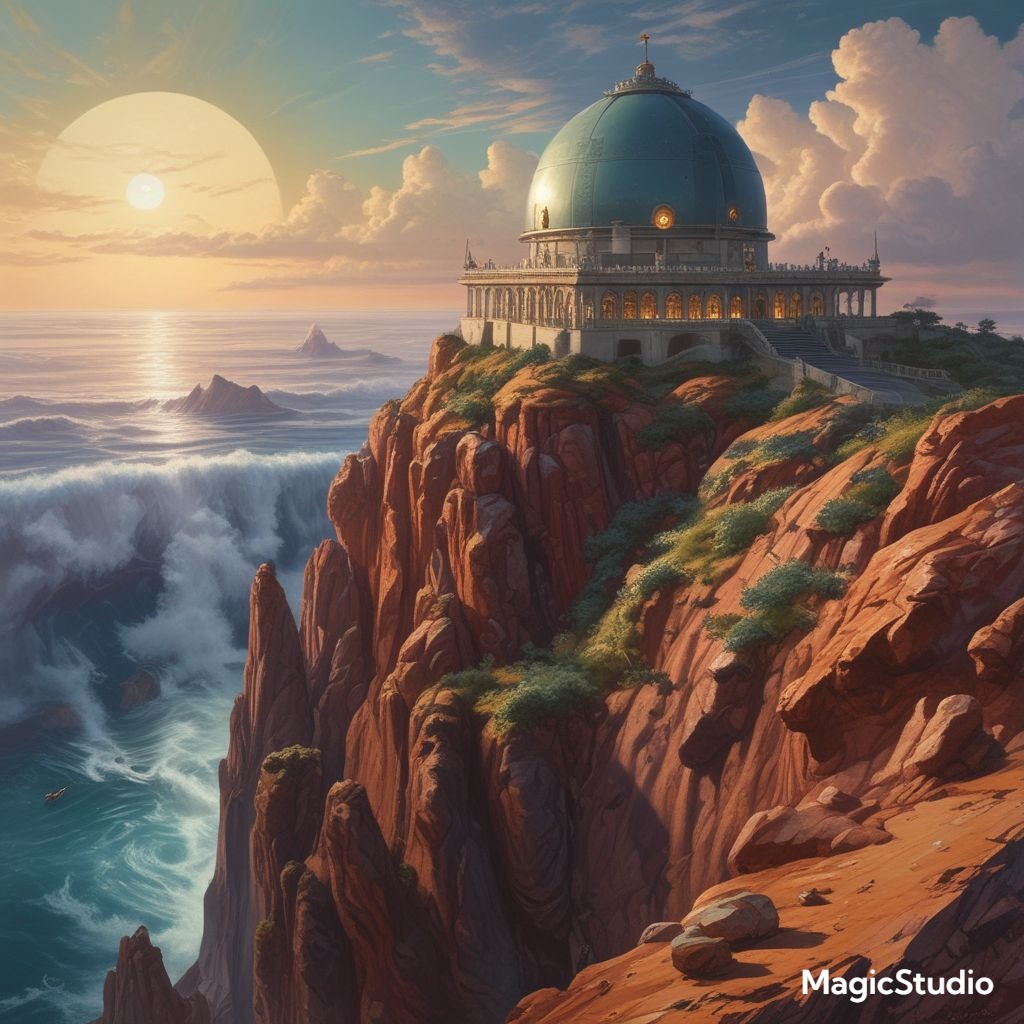
For millennia now the Atlanteans were obsessed with the Great Vault—the Firmament of our world. The Mylars had inspired them to this pursuit. Kaelin perfected it. Using lenses carved from the Mylar quartz and mirrors polished to a divine sheen, Kaelin’s early astronomers gazed upward not to find “planets,” but to read the very handwriting of The Great Creator upon the Dome.
Inside Kaelin’s observatory, the floor iwas a map of the Flat Earth, rotating in perfect sync with the luminaries above. To be clear the scholars there weren’t just astronomers; they were Aether-Seers. They learned to predict the shifting of the tides by the hum of the stars and hear the resonance of the Firmament. They began “communing” with the heavens, trying to peer through the cracks of the cage of our plane-t.
I despised it. Especially because I couldn’t do it!
Finally, I should probably tell you about Kaelin’s other masterpiece – The Hall of Whispers, a grand repository of knowledge [that thankfully has long since been destroyed!]. Constructed from ethereal marble from Lemuria and infused with the essence of some of Gaia’s ancient silica trees that Elara had sent to Atlantis, the hall’s architecture seamlessly blended nature and craftsmanship. The Hall of Whispers was unique for its enchanted acoustics: any spoken word within its walls was gently amplified and carried throughout the hall, allowing for the softest whispers to be heard clearly. It was a place of meditation and reflection, where the gentle murmurs of knowledge created a serene and inspiring atmosphere. This feature made it an ideal place for scholars and seers to share their wisdom and for the preservation of oral histories.
It was the greatest university the flat plane had ever seen. It held the scrolls of the Mu Men, the chronicles of the Amorosi, and the blueprints for a world that functioned in perfect, “free” harmony with the Aether. It was a repository of power that rivaled my own library in the Cauldron.
Like Elara before him, Kaelin too had to go.
The Beast of the Abyssal Trenches
Since the world was already broken and the ground still soft from the Great Liquefaction, I decided to finish off Kaelin and his wonderful city with something… visceral. I reached into the blackest trenches of the Great Ring and stirred the slumber of a Leviathan.
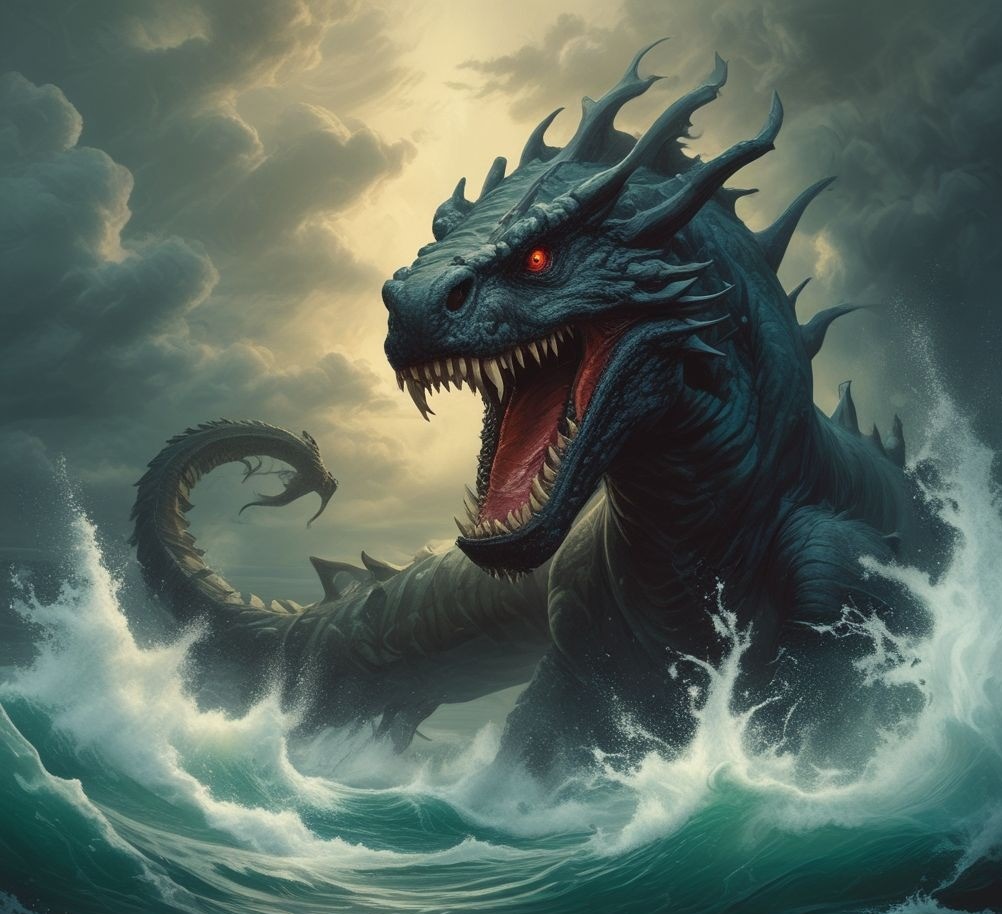
This wasn’t a mere fish, you understand. It was a dragon of the deep, a sinuous horror of scale and hate, born of the same stone-essence as my Brutz but forged in the crushing pressure of the sub-aquatic abyss. Its jaws were large enough to swallow an entire city, and its path through the water created waves that threatened to wash the mud right off the buried continents.
I sent it to Atlantis. I wanted to see if Kaelin’s “stolen” technology could stand against the raw, primordial rage of my own creation.
When news of Leviathan’s approach reached Atlantis, panic spread among their people – just as I’d hoped – for it was clear that even with all their advanced technology, they couldn’t stop the monster from devastating their world. I’ll give Kaelin credit, he somehow figured out that defeating my Leviathan required more than brute force and instead devised a defense plan that used the power of the magical crystals of Lemuria that were within the highest tower of the Celestial Observatory. Inside that spire sat a Great Shard—a massive, humming crystal left behind by the Mylars.
When my monster attacked the island, it caused great damage and murdered untold numbers of people, yet before it could do its worst, Kaelin did something unexpected. He channeled the cold, white light of the Aether through the lenses of the observatory. A beam of elemental fire, pure and blinding, lanced out across the Great Ring. It struck my little pretty, searing through its hide and boiling the sea in its wake. I’ll admit, I was impressed. Kaelin had turned a telescope into a spear of the gods – score one for his side.
But the battle was far from over.
Pain only made my beast more beautiful. Enraged, the Leviathan attacked again. It coiled its massive girth around the base of Atlantis under the sea, its tail lashing out with enough force to crack the foundations of the city apart from the flat earth.
Then it was that Kaelin realized his doom. He saw the serpent’s jaws closing over the spire and, in a final act of desperation, he turned the Aether-fire inward. He didn’t try to kill the beast again; he tried to shield the city. But the energy was too much for the Mylar stones of Atlantis to bear.
When the beast’s jaws struck the observatory, the resulting explosion of light and stone was so violent it nearly tore a hole in the fabric of the Earth itself. My Leviathan died in that flash, its flesh shorn away and only its skeleton remained as its gargantuan weight slumped it back into the depths.
The weight of that dead beast, combined with the unstable silt left over from the Mud Flood, caused the very crust of the island to buckle. Atlantis—the jewel of the Second Age—slipped into the abyss. It followed my serpent down into a massive fissure in the sea floor, where it rests to this day, a ghost city of mud and marble.
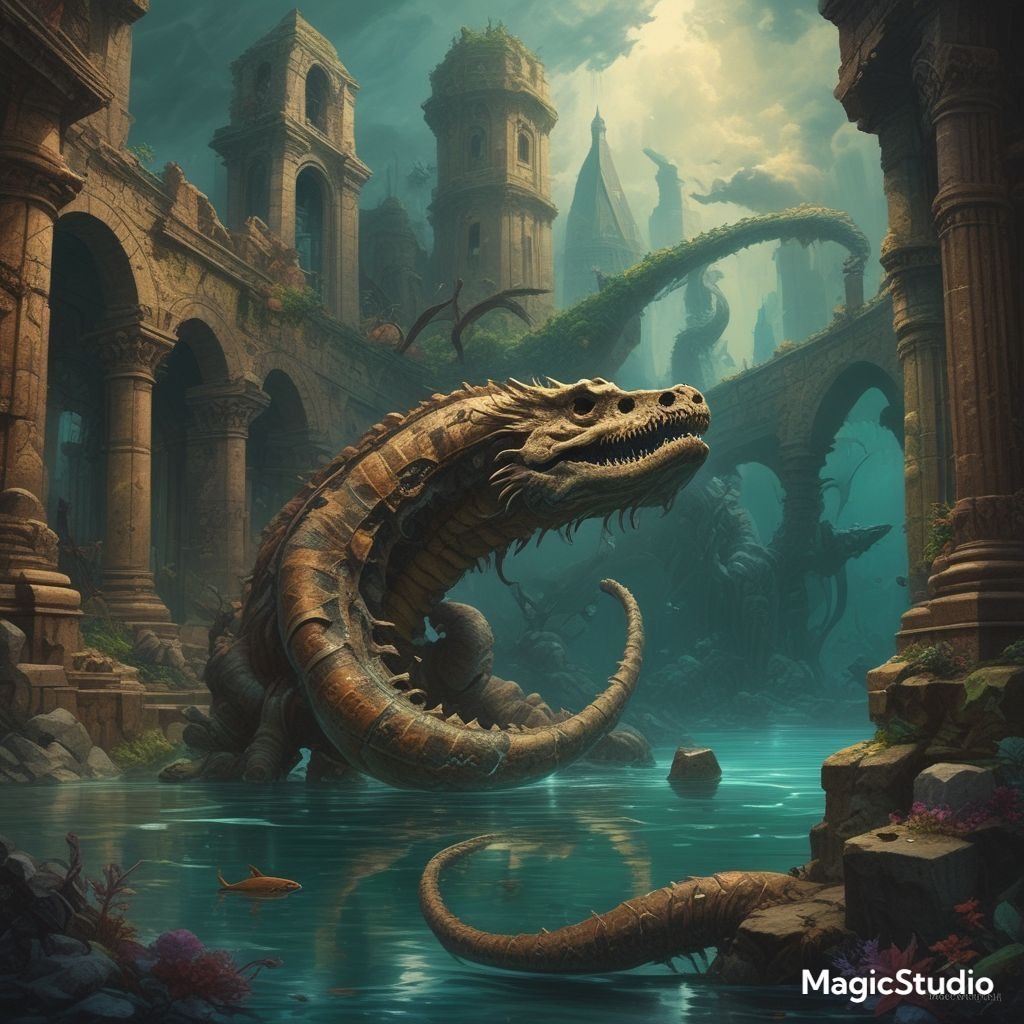
As for Kaelin, like so many of those who perished, his body was never found – I can only assume he perished like the beast I sent to destroy him, yet whether this is true or not who can say? From my perspective it was a job well done as another nuisance was taken out – score another win for me.
The Rise of the Sage
I checked the “Kaelin” box on my list and poured myself a chalice of blood-wine. But mortal life, unfortunately, is like a week and sometimes I get tired of being a gardener.
Like the Mylar, the Atlanteans survived. They had other outposts, other Star Forts they had reclaimed from the mud along the coastal rims and beneath the waves. And eventually they found a new leader: Caius, the Ocean Sage.
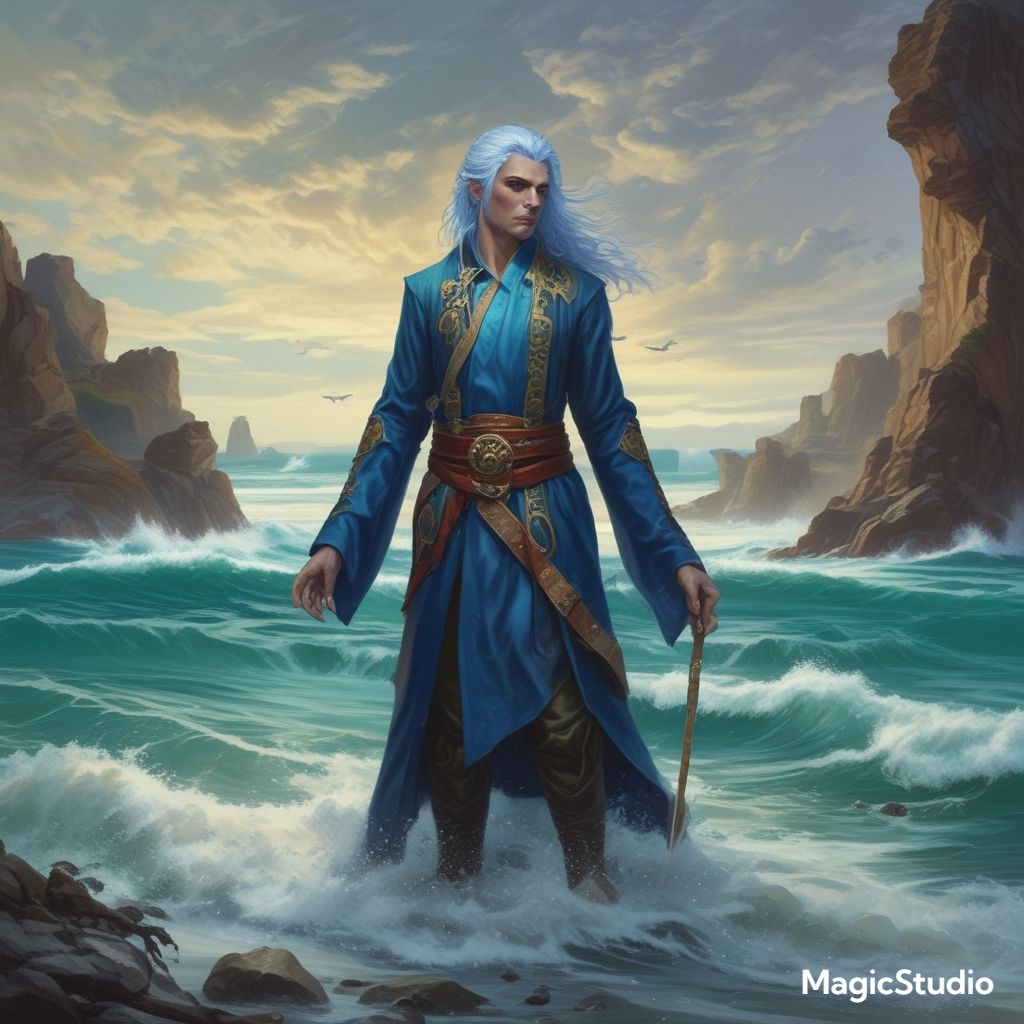
Caius was a different breed than Kaelin. He didn’t care for the stars or the “Lamentations” of the past. He was a master of the currents. He mapped the Flat Earth’s waters with a cold precision, weaving together an underwater network of “Aqua-Ways”—paths carved through the tides that allowed his people to move like shadows across the empire.
Under Caius, the Atlanteans did something that truly piqued my interest: they stopped praying.
They looked at the ruins of Kaelin’s city and the silence of the Mylars, and they decided that they were the only gods that mattered. They became secular. They became “scientific.” They looked at the beautiful, brutal truth of the world and tried to explain it away with “mechanics.”
I couldn’t have been happier. A race that doesn’t believe in the divine is a race that has no armor against a devil. While the Amorosi were still chanting to Alyssa in their forests, the Atlanteans were building an empire of ego.
And in that ego, I saw the perfect opening to wipe them both off the map.
 The Apocrypha of Azazel