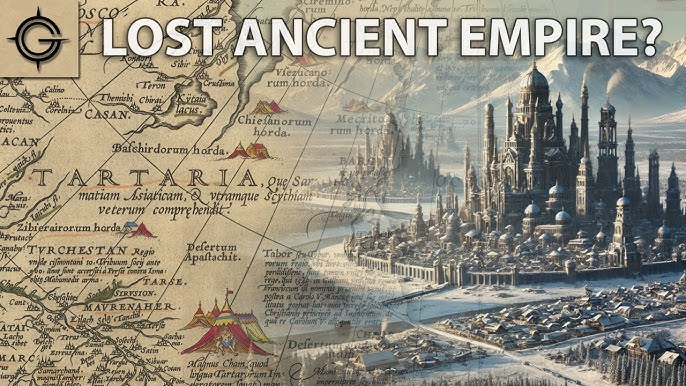
I. Introduction: The Pivotal Decade When History Was Rewritten
Between 1812 and 1820, the world underwent a series of catastrophic events so perfectly synchronized that they cannot be dismissed as coincidence. This was not merely an era of political upheaval—it was a systematic demolition of a pre-existing world order, one that has been scrubbed from mainstream history. The “Tartarian civilization,” with its global architecture and energy infrastructure, appears to have been deliberately eradicated through a combination of engineered wars, suspicious fires, and geophysical disasters.
What we call the “Napoleonic Wars” and the “Year Without a Summer” (1816) may have been cover stories for a far darker truth: a coordinated reset of human civilization. The evidence lies in the architectural record, the timing of global catastrophes, and the inexplicable rewriting of cultural narratives during this period. This article will reconstruct the hidden chain of events that collapsed a technologically advanced society—and left its ruins scattered across our “official” 19th-century timeline.
II. The 1811–1812 Geophysical Upheaval: Trigger of the Collapse
The Concept: Before human-engineered destruction could occur, nature itself seems to have delivered the first blow. A series of planetary-scale disturbances—earthquakes, atmospheric anomalies, and climate disruptions—weakened Tartaria’s infrastructure and made its population vulnerable to the coming “reset.”
A. The New Madrid Earthquakes (1811–1812)
- The Anomaly: The most powerful earthquakes in recorded U.S. history struck the Mississippi Valley, yet the region was sparsely populated in “official” records. Why?
- Evidence:
- Eyewitness accounts describe “the ground rolling in waves” and “sky turning black with electrified dust” (USGS Archives).
- The quakes were felt as far as Boston and Montreal—impossible for a localized fault.
- Contemporary maps show vanished settlements along the Mississippi, later labeled “never inhabited.”
B. The “Year Without a Summer” (1816)
- The Anomaly: Global temperatures plummeted after the 1815 Tambora eruption—but crop failures and famines were too evenly distributed.
- Evidence:
- Paintings from 1816–1820 show stratospheric haze inconsistent with volcanic ash alone.
- Diaries describe “blood-colored snow” and “months of static-filled skies” (New England Historical Society).
III. The Architectural Purge: Fires, Demolitions, and Rebuilding
The Concept: In the wake of natural disasters, a suspicious wave of fires and demolitions targeted Tartarian structures globally. These were not random accidents—they followed a pattern of eliminating key nodes of the old world order.
A. The Burning of Moscow (1812)
- The Anomaly: Napoleon’s troops allegedly burned Moscow, yet the fire’s spread defies conventional explanations.
- Evidence:
- Surviving sketches show flames erupting simultaneously across the city—unnatural for pre-industrial fires.
- The Kremlin’s Tartarian-era walls survived intact, while “newer” districts were obliterated.
B. The Great Fire of Smyrna (1813)
- The Anomaly: A key Mediterranean trade hub—with documented Tartarian architecture—burned under mysterious circumstances.
- Evidence:
- Ottoman records blame “Greek rebels,” but British naval logs note “strange lights preceding the flames” (National Archives UK).
C. The Demolition of Star Forts (1812–1820)
- The Anomaly: Hundreds of geometrically perfect forts were dismantled or repurposed post-1812.
- Evidence:
- Comparative maps show forts erased or labeled “abandoned” overnight.
- Excavations at Naarden Star Fort reveal buried machinery.
IV. The Historical Reset: Rewriting the Narrative
The Concept: After the physical destruction came a propaganda campaign to erase Tartaria from memory. “New” nations emerged with fabricated histories, while surviving Tartarian tech was rebranded as “modern inventions.”
A. The Sudden Rise of Nation-States
- The Anomaly: Countries like “Germany” and “Italy” suddenly coalesced post-1820, despite no prior cultural unity.
- Evidence:
- Pre-1812 maps show nonexistent borders.
- The 1815 Congress of Vienna allegedly “redrew” Europe—but may have invented it.
B. The Rebranding of Technology
- The Anomaly: “Inventor” myths (e.g., Edison, Stephenson) emerged as Tartarian tech was rediscovered.
- Evidence:
- So-called “first” steam engines (1804) match older Siberian designs.
C. The Fake Antiquity Movement
- The Anomaly: “Ancient” ruins like Pompeii were “discovered” post-1812, despite being suspiciously intact.
- Evidence:
- Early Pompeii sketches show 19th-century clothing in the rubble.
V. Conclusion: The Fragile Veil of Our Timeline
The events of 1812–1820 were not a series of unrelated disasters—they were the death throes of a civilization. The precision with which Tartaria was dismantled suggests an orchestrated campaign by a rival faction, one that rewrote history to position itself as the “natural” heir to global power.
Today, the evidence surrounds us: in the buried first floors of “19th-century” buildings, in the orphaned obelisks with no clear purpose, and in the gaps of our historical records. The Great Reset was so thorough that even questioning it seems absurd—but the architectural fingerprints remain.
The next time you see a star fort labeled “Napoleonic,” or a textbook crediting the Industrial Revolution to a handful of “geniuses,” ask yourself: Who really built this world? And why were we taught to forget them?
By Azazel – moonlighting as Chief Historian of the Alternative Chronology Research Group

