Part IV: The Pawn of Prophecy
Chapter 2: Mining Day
“May the might of Rhokki protect us…” Mirkir The Wyze called out from his place at the altar, his ebon robes absorbing the glow from the candles as he led the celebration for his people on Mining Day. Mirkir, the Drokka’s High Priest, was a power player from the Nave family, and also unknowingly another of my minions. Mining Day was the holiday in which Mirkir was the star, and he reveled in seeing his church packed with people. After relishing the power he had to make the people speak or stay silent, he rang a giant gong, signaling the people’s reply.
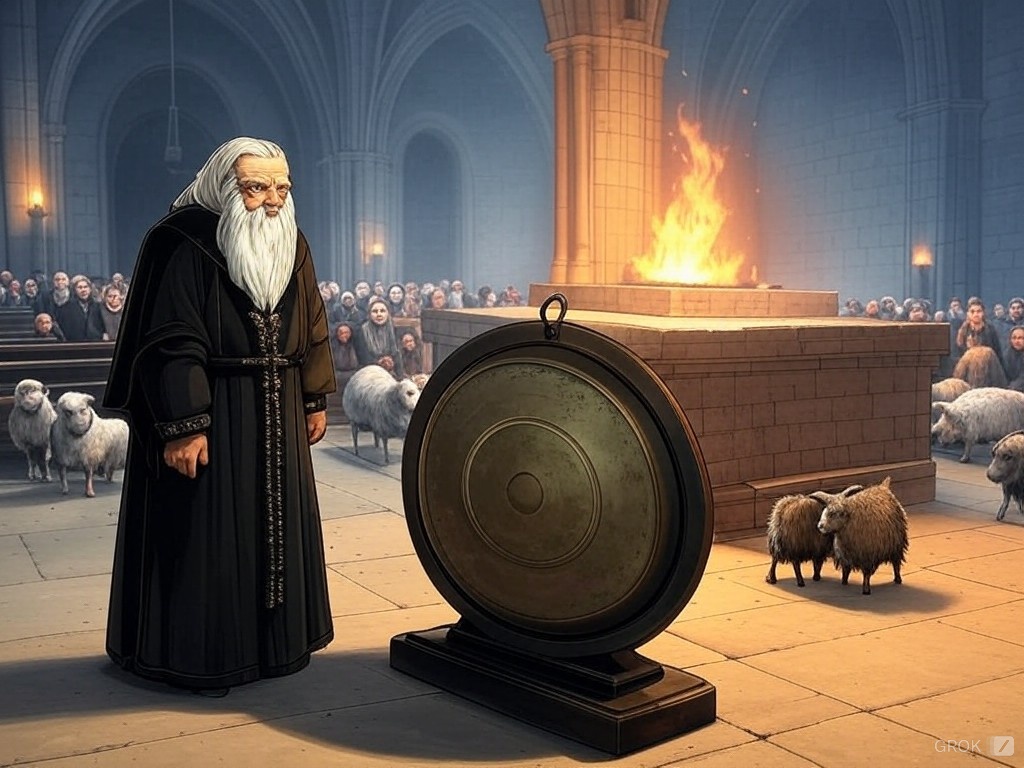
“…from the terrors that haunt the day.” Hacktor fervently voiced the prayer’s reply along with the rest of the crowd that filled this sacred cavern.
[Like all church services that followed man-made rules, this one was filled with a mix of comic ritual and mindless dialogue – the people in the crowd lapped it up like the pitiful sheep they all were – Hacktor included. I’ll give the Naves credit, they’d done a fine job of making the Drokka ‘mass’ into quite a show – and I appreciated that much of the praise was directed towards my version of the god Rhokki, but like all your religious services it was a waste of time. If you people actually believe that any of your gods care about all the little chants you profess or the quirky rituals you do, think again – sorry to disappoint you, but we have more important things to do with our time than pay attention to your comically mindless ‘praise and worship’ routines].
Throughout the mountain kingdoms, the various clans of men that made up the Drokka people were all gathered in churches on this day—for Mining Day was the holy day that signaled the start of the Drokka new year. Today marked the 295th time that Mining Day was being celebrated to commemorate the time when the Drokka people first chose to delve into the earth to make their underground homes and escape the slavery of the world above.
Having been instructed in the faith by Mirkir himself, Hacktor well knew that the hero of Mining Day was the famed forefather Ajax The Freemaker. The exodus Ajax led and the underground city he founded, Oz, marked a turning point in Drokka history. The famous image of his people’s escape had been burned into his mind since he was a boy…

So important was Ajax’s rise to become king of his people and his subsequent establishment of Oz (“a land they could call their own”) that the Drokka people based their entire time system around it—prior to the freedom Ajax secured for them, their period of bondage was part of an era which the scribes entered into the Drokka Kroniklz as either Before Oz (BO) or After Oz (AO).
[Does the whole BO/AO time system sound familiar? It’s just another example of how you people can’t come up with anything new.]
The cathedral where Hacktor attended services was overflowing—for even though this national holiday was being celebrated throughout the eight kingdoms, because Iztak was the religious capital of the empire, everybody who was anybody was here – including representatives from all seven of the elite families – as well as countless members of the middle class and warrior ranks.
Yet that wasn’t necessarily a good thing—for the church was so full that its capacity was strained – especially among the commoners. Drokka were packed tightly in the pews and as they sat there dressed in all their finery, the people roasted in such close quarters underground. The Drokka’s ingenious ventilation systems couldn’t provide the relief that was needed – more than a few Drokkina and even some of the strongest Drokka men fainted in the close air.
They are weak-minded sheep who lack the fortitude necessary to be here today, Hacktor stewed whenever he heard another person keel over a few rows back. [It should be noted that—since Iztak was the religious center of the Drokka’s world and thus was a kingdom without a Kon-Herr—Hacktor, the royal family, and the other elite families of society had the luxury of sitting in the front rows, where the air was less dense, so Hacktor’s mindset was a bit hypocritical.]
[Interesting side note: speaking of being over-crowded, it wasn’t just at Iztak where the people were packed in. Part of my strategy with aiding Baldur’s rise to power and blessing him with a peaceful reign was that I knew it would result in a population boom within the Drokka kingdom. Had the wealthy families used the king to approve the opening of new cities within the mountains whilst the population grew this wouldn’t have been a problem, however I manufactured events such that the wealthy elites who engaged in commerce outside the realm realized higher profits for less effort, and this resulted in more of their focus being put into external trade endeavors instead of internal expansion or internal resource utilization. (It’s kinda like a modern day rich country that has a lot of a natural resource at home, but rather than use what they have for pennies on the dollar, the government instead allows their rich cronies to buy that same resource from outside the realm for allegedly higher prices which the merchants in turn sell to their own people for jacked up prices whilst giving a secret kickback to the courtiers who made it all possible. The end result – the gets richer off the backs of the commoners)].
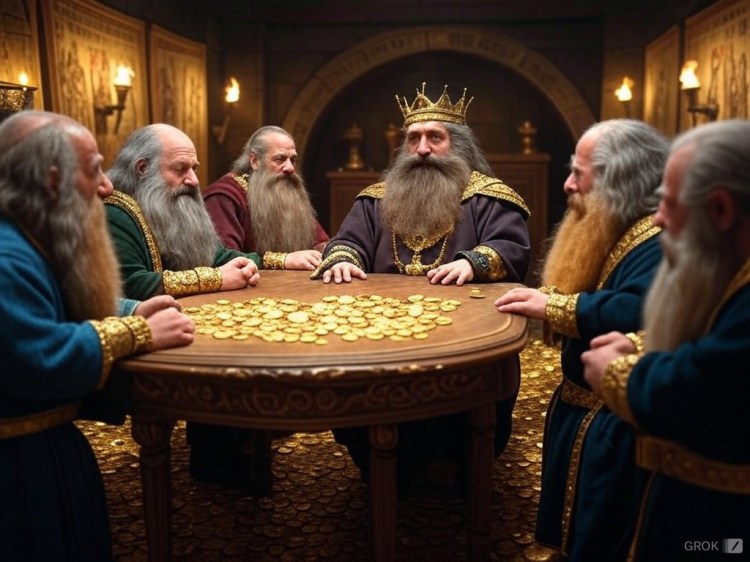
Now I couldn’t care less about elites making money and taking advantage of the poor – happens all the time, right? No, what mattered to me was that Baldur’s regime was responsible in the eyes of the public for founding new cities – and that was not happening anymore – this resulted in the Drokka’s growth in population occurring within the perceptions of a confined space and with a self-imposed growing reliance on imported goods.
Baldur was too naive to understand any of this. As a result those ingredients made for a great recipe in which to manufacture a made-up crisis — and when that crisis reached a head I knew I’d get what I really wanted: more people to use for my now better-than-ever war machine.
With Hacktor still at the church service, besides him sat his father Kon-Herr Baldur, along with Hacktor’s twin sister Hecla, his half-brother Bran, and the rest of the royal family—the elites of all elites – or so Hacktor foolishly believed.
[He was, as yet, too young to realize that just because someone is called ‘the king’ doesn’t actually mean they are in charge – as is so often the case, there is a ‘hidden hand’ of power behind the throne – and that was true for the Drokka too. Like royals everywhere, they foolishly overlooked the ancestral land owners, wealthy bourgeoisie merchants, and unelected courtiers who were the real powers of the kingdom].
Pah! I should be on the dais with Mirkir tending to The Flame like the Holy Alkolyte I am, not stuck down here with these of little faith. Hacktor still rued being forced to give up his alkolyte robes now that he was leaving Iztak.
Fidgeting in his seat, Hacktor was unable to get comfortable in the pew as he watched the other alkolytes tending to the never-ending line of sheep being led to the sacrificial slaughters. In his mind he pictured the passageways in the bowels of the cathedral where he knew countless clerics were lined up with their animals – waiting to lead them out to the main altar when it was their turn.
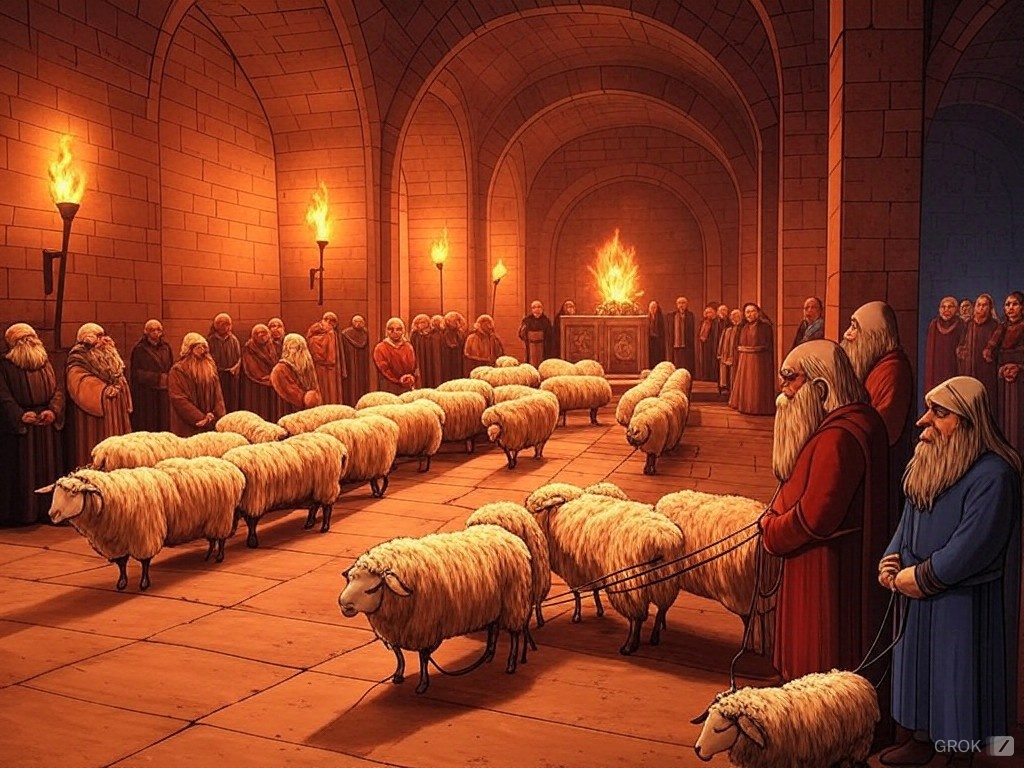
The sheep in the audience (i.e. your ancestors) paid little attention to the real sheep incessantly bleating while they waited to die, nor did they hear the animals’ screams of death as they knife came down. What the people complained to each other about was the added heat created by the presence of the herds themselves which only further served to make the church feel more like the never-ending torments of the Fires of Kawkawzuz than a holy service they were thankful for.
[Ah, the wonderful world of animal sacrifices. Convincing humans to murder their herds, burn their crops, and sometimes even sacrifice their children, was always one of the skills I was most proud of. Need I remind you that I invented the rather comical concept of Sacrifice very early on in the history of your people. Recall from the Hidden Histories that my made-up god Yahway offered this little carrot to Adam as a potential way to atone for the Original Sin fiasco that got the man and his mate kicked out of The Garden of Eden. Remember how Adam and Eve then taught the concept of Sacrifice to their children, and although it directly led to a disastrous outcome with their sons Kane and Abel (with Kane murdering Abel out of jealousy when my Yahway favored the latter’s sacrifice), Adam’s clans continued to try to appease Yahway with ever more sacrifices. It never worked, but then again these men didn’t have many other options—for, as you know, my Yahway was always a jealous god and Adam’s people lived in constant “Fear of the Lord.” The end result is that the concept of Sacrifice became so ingrained in the minds of humanity that it lived on for ages—with the Drokka being yet another example of people who willingly (read: foolishly) wasted their precious resources to try to appease gods that had long since (read: never) been listening to them.]
Besides royals from the eight kingdoms of the Drokka, merchants, military officers, and other bourgeoisie dutifully packed the rest of the pews, while commoners from the local communities and pilgrims from throughout the underworld crammed into the aisles, balconies, and any remaining spaces they could stand.
I can feel their eyes upon me. Hacktor squirmed. Why didn’t they stay home? Iztak isn’t the place for lukewarm souls.
Although Hacktor had already been at Iztak, most of the crowd had left their palaces and homes many days before to travel here—making the journey entirely underground thanks to the engineering marvel known as the Drokka Byways—an elaborate system of natural and man-made tunnels that connected the various Drokka kingdoms that dotted the far reaches of The Rhokki’s and the network that supported the East-West trade routes of TerrVerde proper.
Iztak—my home—until today. Hacktor couldn’t help but reminisce about the place he’d lived since he was eight years old. The place where he’d been instructed in the tenets of the faith by Mirkir and where he’d learned the art of war from Haraclez. Neither of whom father ever wanted for my teachers.
What Hacktor didn’t think about – what he tried hard to push to the back of his mind — was that Hacktor had been abused by both of the men he admired. Mirkir had not only taken the eight year old Hacktor and brainwashed him into a war-mongering zealot, but he’d also poisoned Hacktor’s mind against his father.
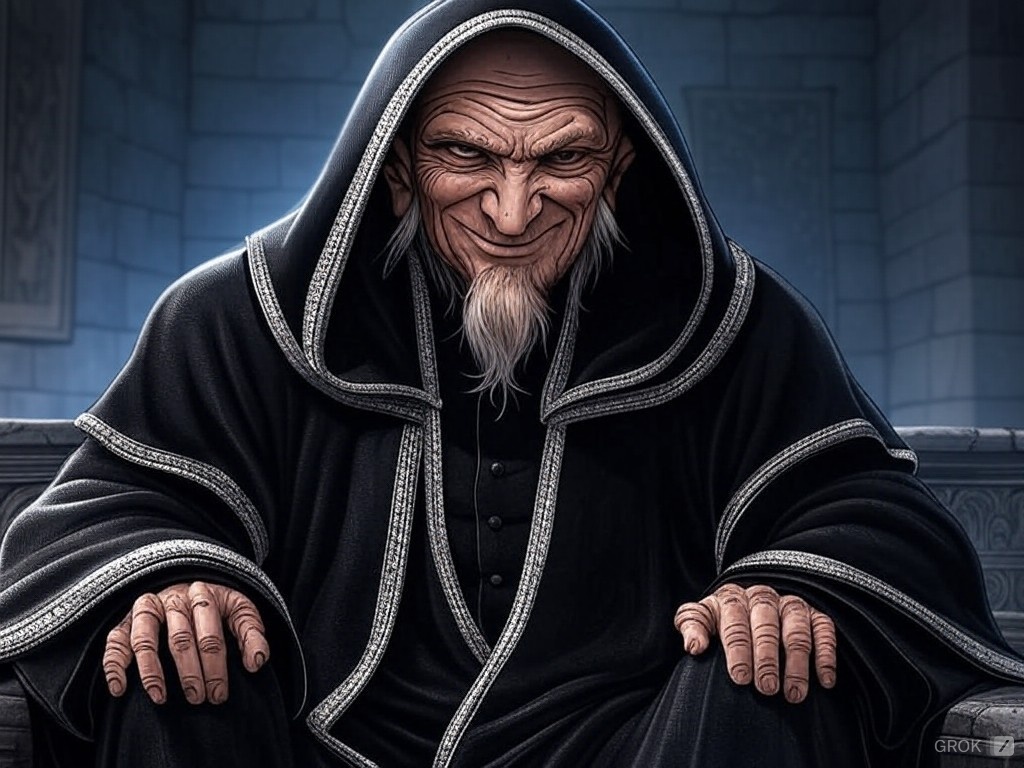
And as if that wasn’t enough, Mirkir had also made Hacktor his catamite – abusing the poor boy to further dominate him — ensuring that he’d always command over him. Shocking as it may sound, none of this was hidden or even frowned upon – instead Hacktor was envied for his station as Mirkir’s Beloved – a rite of passage ‘enjoyed’ by only the most worthy of alkolytes.
And then there was Haraclez – although he was the general of Mirkir’s holy armies at Iztak, he was too much a man of the world to let religion stop him from enjoying life.
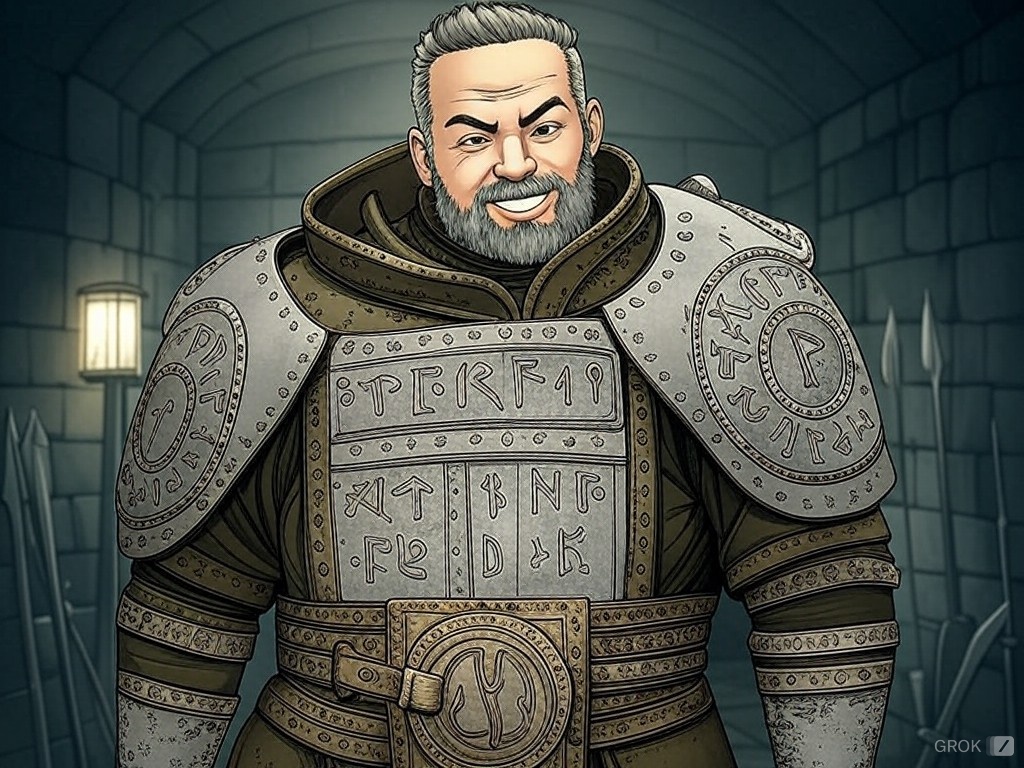
Haraclez drank, smoked, fought, gambled, and womanized – and he introduced Hacktor to all of these vices by the time he was only thirteen.
The result of all this – Hacktor did his best to make sense of the world, but let’s face it, the boy really had no chance, did he?
Oh, and I guess I should mention that everything Mirkir and Haraclez did was pretty much orchestrated by me as their puppet master – but I’m sure you knew that already, right? Such is the price the patsy’s must pay when they become embroiled in the games of those in power – such was Hacktor’s entry fee into fame – or in his case, infamy.
 The Apocrypha of Azazel