Part IV: The Pawn of Prophecy
Chapter 4: Baldur the Bold
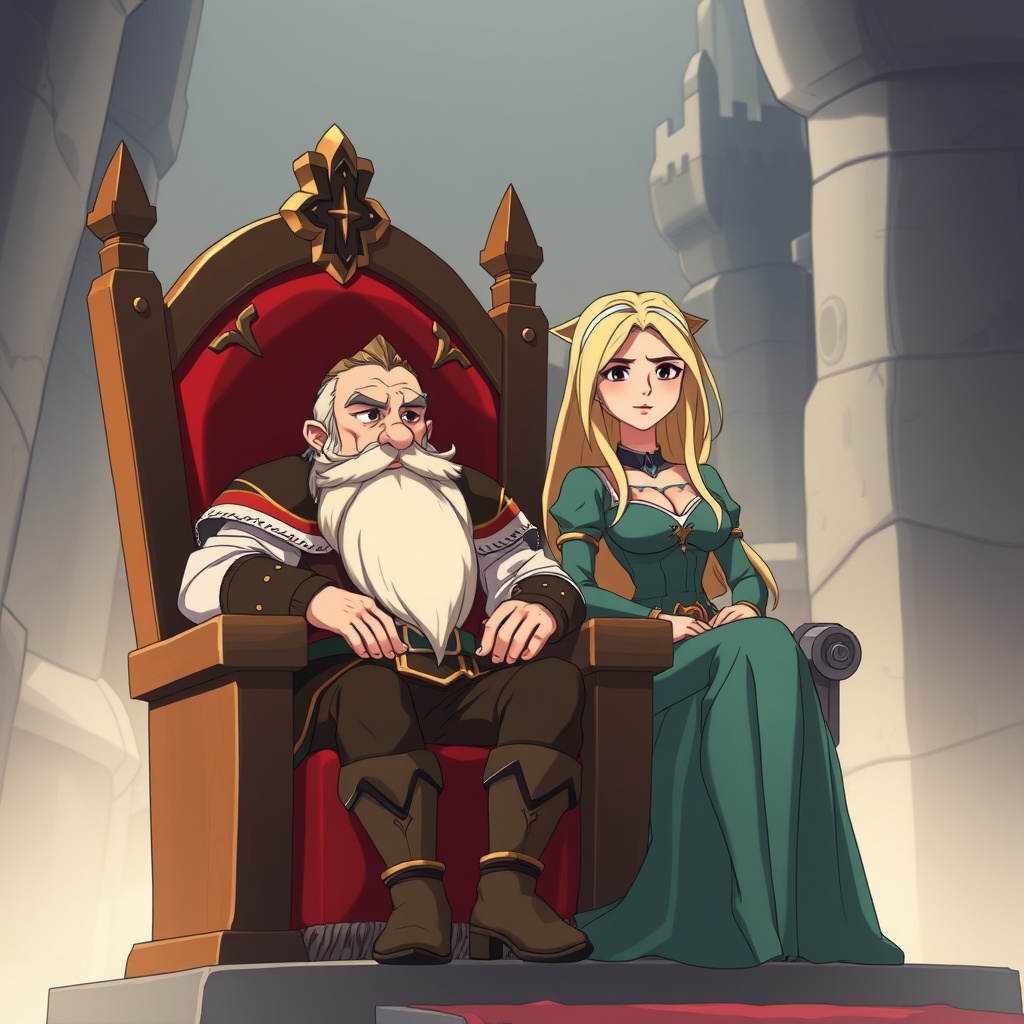
Despite the depth of Hacktor’s intense emotions about his father, he knew others in the crowd felt differently — for Baldur’s reforms during the last fifty years had transformed international relations with their rivals and the once hated Derkka were now the Drokka’s most important trade partner. In addition, Baldur himself had actually taken a Derkka woman for one of his wives — and not just any slaver either, but Gawain, a daughter of Garrick of The Golden Hand, the current Grand Marduk of the Derrka!
[What can I say, my webs were well crafted – haha].
I still can’t believe my father married her. Hacktor fumed. Praise be to Rhokki that she is not here today. If Mirkir didn’t behead her, then I certainly would have!
Hacktor’s own mother Vilma had died giving birth to he and his twin sister Hecla. Although he’d never known his mother, Hacktor distinctly recalled the fact that Baldur had only one wife when he first rose to power. As is only natural. His nanny and many of the servants often spoke of how Baldur loved Vilma deeply and that the king lost more than just a wife or queen on the day Vilma died — he’d lost his heart too. And his mind if you ask me.
Mists clouded the memories of early childhood now and thus Hacktor struggled to reconcile the wispy visions of a happy family life with Baldur and Hecla when it was just the three of them because those hazy mental pictures didn’t mesh with how events played out – nor how he felt currently.
By the time Hacktor turned five, Baldur had taken a new wife — Carine, the daughter of Bane, Herr of Kel-de-Kaba, the military capital of the eight kingdoms — a move clearly done to secure support for Baldur’s then shaky grip on the throne; for although each kingdom had its own army and the Kon-Herr was, at least by right, the royal commander of all of these forces, Bane commanded the majority of the Drokka army — thus solidifying the Kel-de-Kaba Herr’s backing was a wise move by Baldur. [I wonder who gave him that idea?] Yet within a year the high king shocked the court and the entire underworld when he announced that he was taking another wife and additionally that he was starting a royal harem — the first Kon-Herr to do so in three centuries, for the practice had long since been outlawed by the faith.
How did father manage to keep Bane on his side after that affront? Hacktor wondered again. How did he withstand Mirkir’s inquisition about the sinful practice?
Hacktor was too young at the time to wonder about such things back then, but since royal diplomacy was soon to be his world, he pondered the dilemma now. Perhaps in time he would have his answer. Nonetheless, somehow Baldur had convinced his council that the practice would be good for diplomacy. And so, over time Baldur managed to build his harem — soon taking in wives from each of the power families within the underworld and then stretching his scope beyond. To the Outside. To the Others.
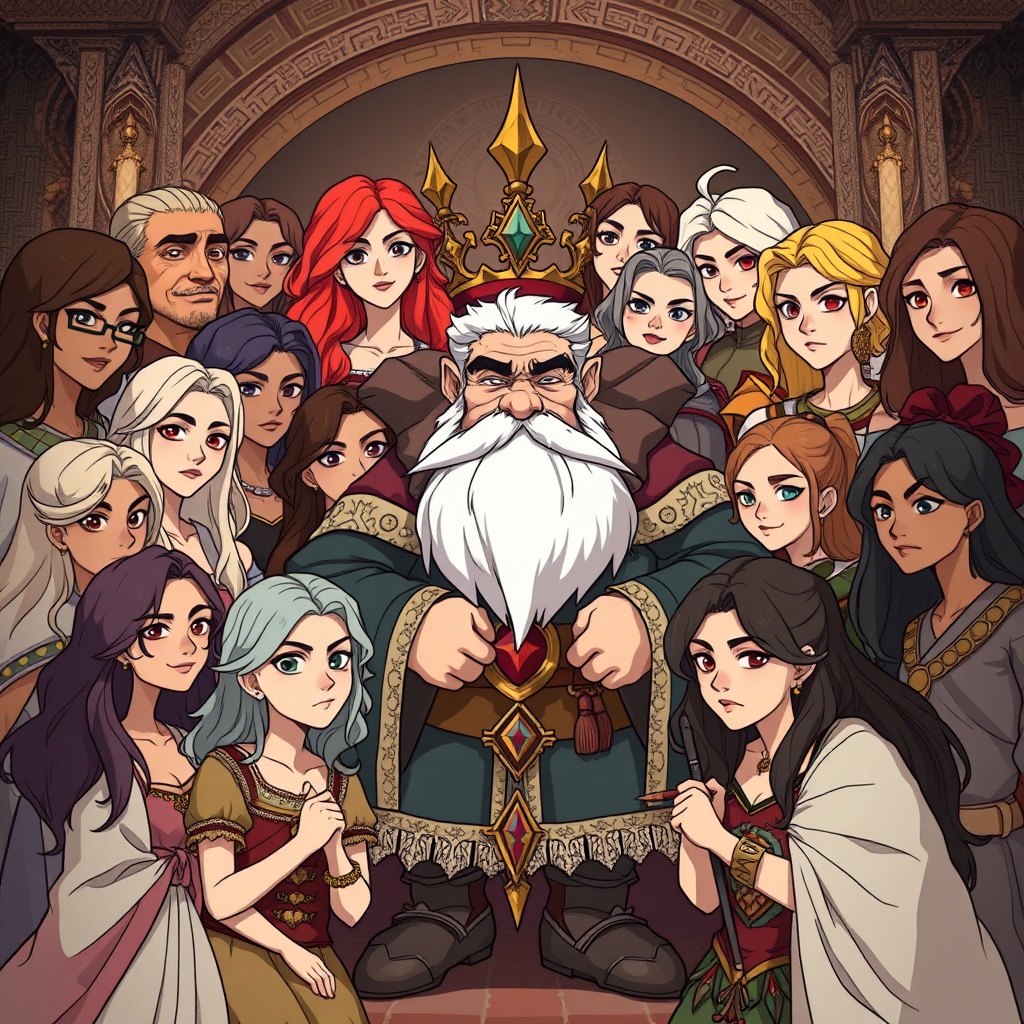
The first of the Overworld queens to join the harem was a girl from Agaria – a potential trading partner east of the Rhokki’s. There soon followed more from nearby lands. And since trade did indeed improve after each of these moves (with ever more Overworlders using the Drokka Byways and thus paying the Drokka taxes to move their goods), the Drokka people did benefit by enjoying the fruits of these international relationships, therefore none could argue that Baldur was successful with this reforms. But surely none could have foreseen that he would marry a Derkka! [None except the master behind the plan, that is].
Hacktor was fourteen when Mirkir told him about his father’s most egregious sin — Gawain.
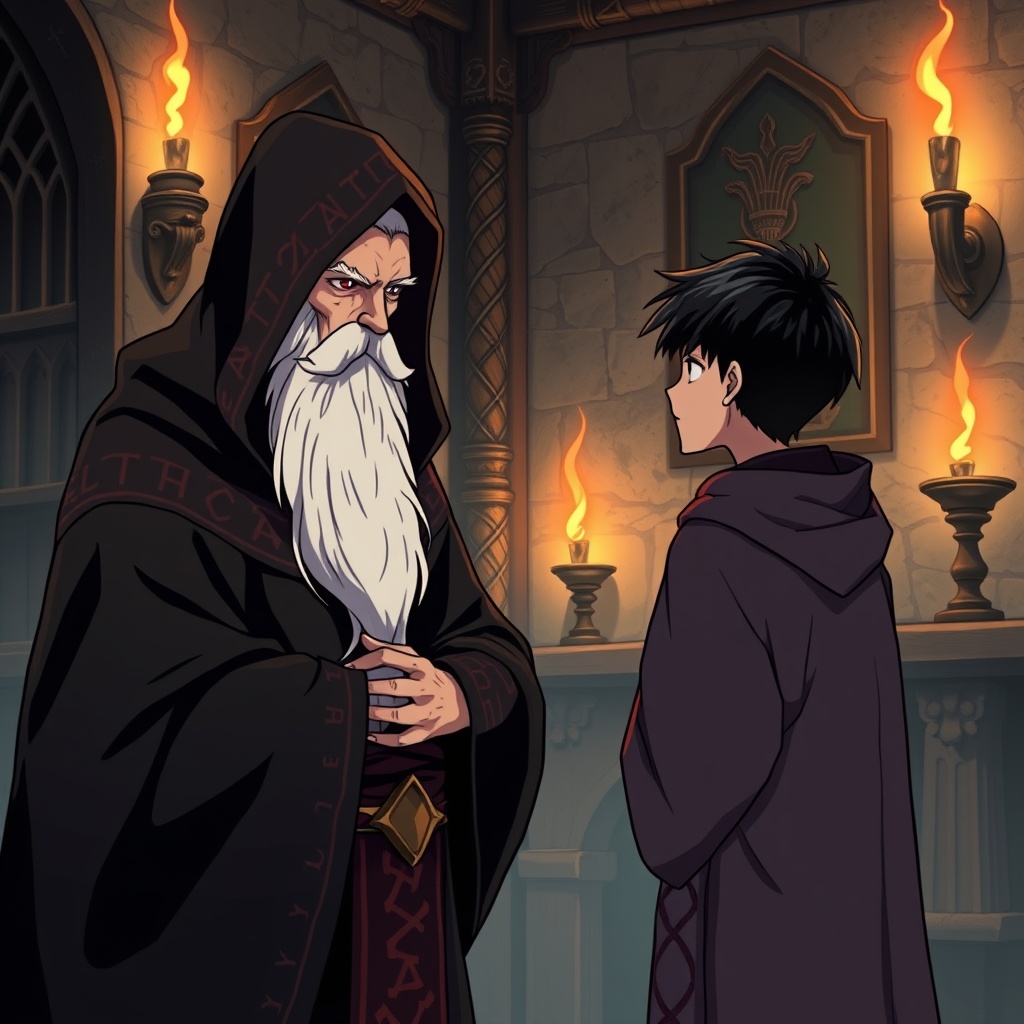
When he’d first come to Iztak, Hacktor immediately came to understand that Mirkir did not approve of his father — something he was not aware of before he’d become the high priest’s disciple. Yet in that first year, Hacktor was told that Baldur had committed many sins against the faith — at least according to Mirkir. At first, Hacktor did not believe the high priest’s charges, but the more time he spent as Mirkir’s alkolyte the more he found himself unable to deny Mirkir’s wisdom.
Hacktor’s time under Mirkir’s tutelage had profoundly altered his perception of his father and the world around him. The high priest had a way of weaving his teachings with a subtle blend of truth and ideology, shaping Hacktor’s thoughts and beliefs with meticulous care. Mirkir spoke of the old ways, the true faith, and the sins of those who strayed from it. He painted Baldur’s actions as not just politically misguided but spiritually corrupt, a betrayal of their very essence as Drokka. Mirkir’s sermons often echoed in Hacktor’s mind, phrases like “the purity of the blood” and “the sanctity of the faith” becoming mantras he could not ignore.
Contrasting sharply with these teachings were Hacktor’s fragmented memories of his early childhood. He remembered a time when his father’s smile was genuine, when Baldur would lift him onto his shoulders and promise him the world. These were fleeting images, clouded by the passage of time and the weight of Mirkir’s influence. Hacktor struggled to reconcile the father who had once been his hero with the man Mirkir described. The high priest’s disdain for Baldur was palpable, and over the years, it had seeped into Hacktor’s own heart, eroding any remaining vestiges of filial loyalty.
Hacktor’s nights in Iztak were often restless, plagued by dreams of a happier family life that felt increasingly like a distant fantasy. He wondered if his memories were tainted by nostalgia or if Mirkir’s portrayal of Baldur was skewed by his own ambitions. Yet, every time he doubted, Mirkir’s unwavering certainty pulled him back. The high priest’s vision for the future, one where Hacktor would rise and restore the Drokka to their former glory, was intoxicating. It gave Hacktor a sense of purpose, a path to follow in the murky political landscape of his father’s reign.
These internal conflicts only deepened Hacktor’s resolve over time. He felt torn between the love he once had for his father and the loyalty he now owed to Mirkir. Each sermon, each lesson, pushed him further from the man who had raised him and closer to the mentor who promised him power and redemption. In Mirkir’s eyes, Hacktor saw the future of the Drokka, and it was a vision he could not ignore, no matter the personal cost.
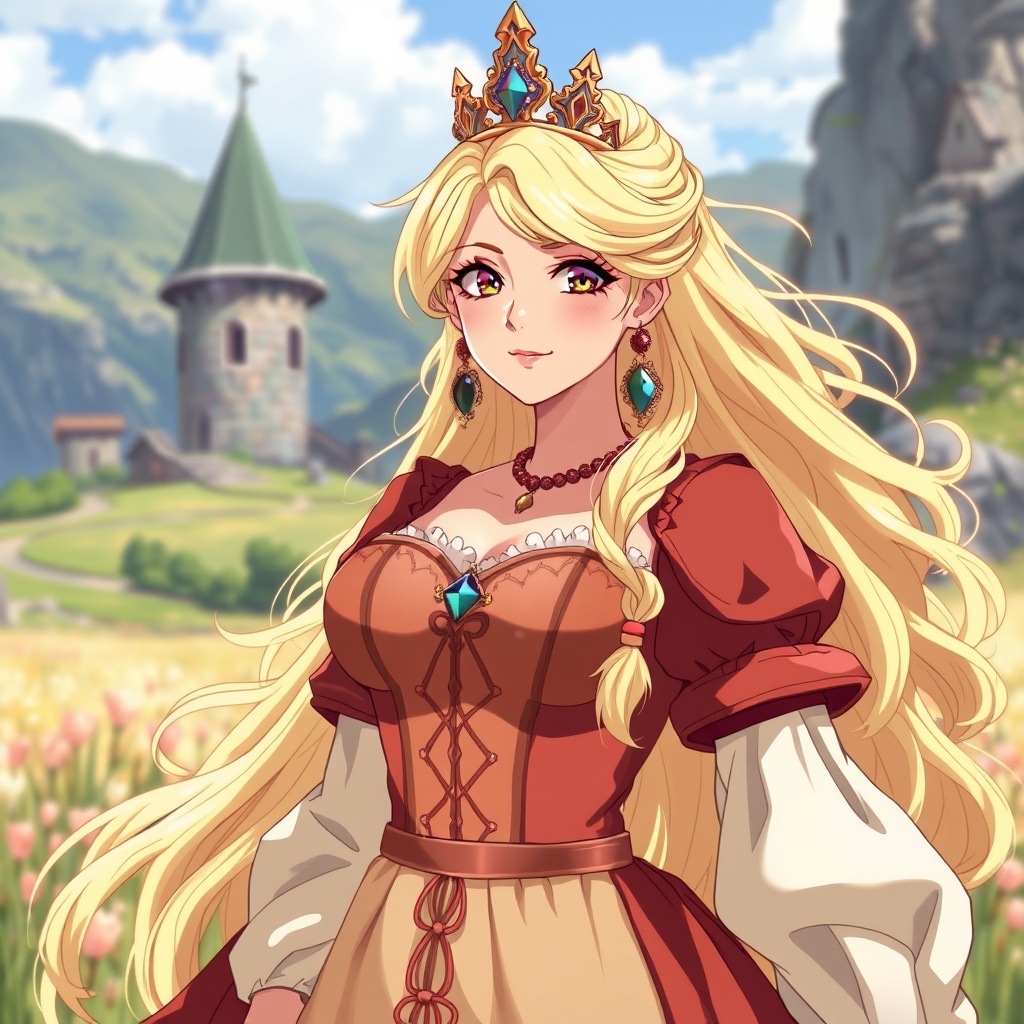
As for Gawain, despite Baldur’s success in using his marriages to improve trade relationships, Hackor had heard that his father’s entire council was against the high king marrying a Derkka – at least at first. But it didn’t matter – for Baldur was relentless when it came to something he believed in and he was dead set on marrying one of his sworn enemy’s daughter. In the end, [with a little help from me on the political side] the king succeeded in negotiating the marriage with the girl’s father Garrick and he married Gawain some four years past — although the ceremony was a private affair and quite unsanctioned by Mirkir or the faith.
Rumors abounded about Gawain and some had even reached Hacktor’s ears. Unlike the other women who made up Baldur’s harem and lived in luxury a few floors below Baldur’s apartments, the king apparently housed Gawain separately — in her own royal chambers which adjoined his. Ever since her arrival, whispers about the breakup of the harem had run rampant through the palace at Rhokki Pass — for it seemed that Baldur rarely invited anyone but Gawain to spend time with him now.
Although he had yet to meet her, Hacktor had heard that Gawain was in her early twenties and beautiful beyond compare and that Baldur, nearly thrice her age, was totally infatuated with the sight of her. Or perhaps he’s infatuated with what’s between her legs, eh? Hacktor spat. How could my father do this to us — to willingly bring a Derrka woman into our kingdom? Who’s to say she is not a spy – telling Garrick about all that she sees?
Hacktor’s eyes now scanned the crowd, noting the varied reactions to Baldur’s presence and he wondered what people thought of their king? Among the elites, there didn’t seem to be anyone who cared – about Baldur, Gawain, or the church service. So long as they make their money, they are happy, Hacktor surmised.
Yet when he looked around to the commoners, he saw murmurs of discontent mingled with the reverent prayers, as whispers of disapproval barely masked by the people’s outward show of respect. Hacktor imagined that Baldur’s marriage to Gawain was still a constant source of contention to them. Surely some saw it as a betrayal of their heritage, a dilution of their bloodline with that of their enemies – just like Hacktor did. And what about the oldsters? Those who had fought and lost loved ones to the Derkka? They must hate my father! Hacktor could see their furrowed brows and clenched fists and he took this as their silent protest against the high king’s controversial decisions.
Yet when he looked at the younger Drokka – those who had not known the bitter wars firsthand – Hacktor was chagrined to see they seemed more accepting. Like himself, they had grown up in a time of relative peace and prosperity, enjoying the benefits of Baldur’s diplomatic endeavors. Trade routes had opened, bringing wealth and exotic goods into their once insular world. Still, Hacktor could not reconcile these benefits with the cost. Gawain was a constant reminder of his father’s perceived betrayal and this gnawed at him. How could my father expect them to embrace a Derkka woman, even if she was the daughter of a powerful ally? The cultural and political implications were too vast, too deeply ingrained in their history of enmity – it was an affront that could not stand!
Hacktor’s eyes now scanned surreptitiously to his left — to his father. At four and a half feet, although Baldur was of above-average height for a Drokka, the king was runt of a man compared to Hacktor — who was nearly a foot taller and at least a stone heavier. Behold, a king who refuses to lead his warriors into battle — yet he actually has the gall to sit there in military garb?
Hacktor’s mind raged at seeing his father’s outfit: upon his head Baldur wore a steel half-helm, burnished a royal black-blue and complete with an multi-colored ostrich plume, a velvet blue cape graced his shoulders, steel greaves, also burnished black-blue, covered his wrists, and upon his chest sat a priceless breastplate made of the finest Rhokkium gemstones — making the armor nigh impenetrable.
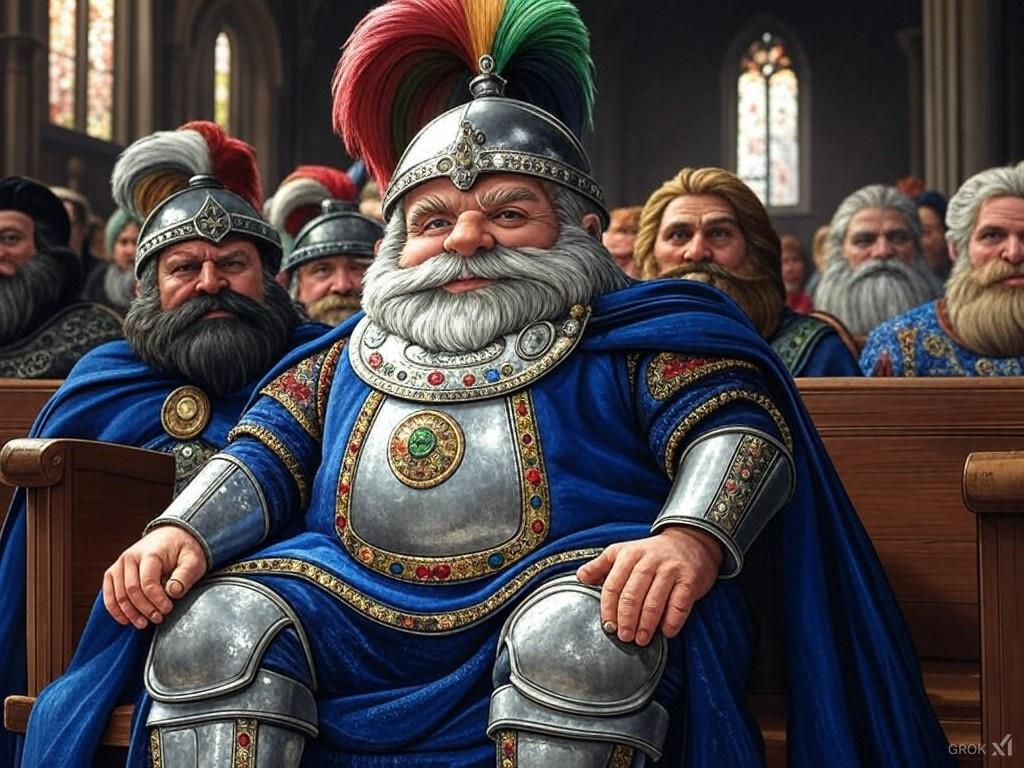
I’ve earned my warrior’s stripes under Haraclez’ secret campaigns, yet my father’s armor puts mine to shame. Although he wasn’t wearing a helm, greaves, or other armor, Hacktor’s station as both a prince and a de facto general in the Drokka army fit with his desire to dress accordingly, as such his hand involuntarily went to the exquisite golden plate mail that covered his own torso — it too a priceless work of art — with a relief of two drokka battle axes criss crossed on the front; yet it was nothing compared to the ever-changing rainbow of colors that his father’s breastplate gave off.
Yet everybody here knows Baldur has never lifted an axe in his life — not even to split a stone. Why the man looks like a complete fool. Hacktor could barely hide his disgust. Baldur spied his son’s gaze — and smiled warmly at Hacktor. If he only knew how much I hated him. Hacktor faked a smile back. You are a coward, father, and one day you will die because of it.
Baldur The Bold? Hacktor grated at the moniker people called his father. More like Baldur The Bashful if you ask me. What has he done but further subject us to the Derkka’s control? In Hacktor’s mind, Kon-Herr Drokka’s were defined by their glory on the battlefield, not the business room… or the bed room. Volzung — the first Drokka to ever die in battle. Berkin — The Right Hand of Rhokki. And of course Ajax — our Deliverer and the inventor of War itself! These are the Kon-Herr’s who glorified themselves on the battlefield; these are the Kon-Herr’s whom History remembers. Not some do-little king who shies away from battle at every turn and marries the daughters of our most hated enemies.
[Naturally the ‘truth’ Hacktor knew about these so-called heroes came from the made-up history he’d been taught. Therefore the prince never knew that while Volzung was the first Drokka to die in battle, he was killed by friendly fire (a mis-aimed arrow to his back from a Drokka archer); nor the truth of Ajax’s birth; nor even that Berkin was a complete farce – his entire persona made up by scribes writing about the past for propaganda purposes! Hacktor, like so many other naive souls, fell for the ruse and played the rube – and that’s what made him useful!]
His gaze flicked to Baldur, whose stern profile was silhouetted against the flickering candlelight. The distance between them felt insurmountable. Hacktor recalled a time when he had looked up to his father, yearning for his approval. But years under Mirkir’s tutelage had shifted his allegiances.
Despite the blackwood fires that burned within the altar and in alcoves around the edges of the cavern, and despite the mass of humanity that was crammed into every available space, the Grand Cathedral was cold. Everything in these mountains are cold — which makes no sense if it’s true that we are supposedly closer to the center of the earth and the fires of Baal at its core. Hacktor had never understood that paradox – were the fires of Kawkawzuz caused by the dark lord or were they meant to keep him locked inside? Nobody had ever given him a solid answer to that question and the mystery often frustrated him. Perhaps when the Ragnarok comes, then I will finally get my answer.
Just then Hacktor’s younger brother Bran broke his concentration with a nudge and whispered into his ear, “Did you hear what was for dinner after this?” At twelve the boy was six years Hacktor’s junior, yet it might as well have been fifty years for all that Hacktor cared.
“Don’t care.” Hacktor grumbled back.
“Mutton.” Bran sighed. “Might as well be nothin’. Oh why’s it gotta be mutton again?”
“Shh.” Hacktor elbowed his brother back. “It’s always mutton on Mining Day, you fool. Now be quiet.”
The ceremony continued for some time more – as is the norm for festivals of this type — regardless of the religion. All the while, Hacktor’s mood continued to darken. One day, father, I will be in control of our people. And then they will see greatness again.
Eventually, after it seemed like half The Nebulungilgalad had been read, all of the sheep had been murdered, and most of the crowd had fallen asleep – including King Baldur.
Then it was that Mirkir finally rose from his chair and initiated the closing prayer, “Oh that salvation for The Drokka will come from our Lord. Let Rhokki restore the fortunes of Oz. Let Ajax rise again and destroy the evil ones.”
“Oh Rhokki we beseech you.” Hacktor and the crowds prayed, rising again.
Mirkir’s chants droned on for nearly a candlemark more, until at last he said, “Hear our prayers, O God. Vindicate us with your might.”
Hacktor recognized the final verses. The time has come. The future is now.
“Challenge not The Drokka.” Mirkir suddenly roared, banging the gong with all his might.
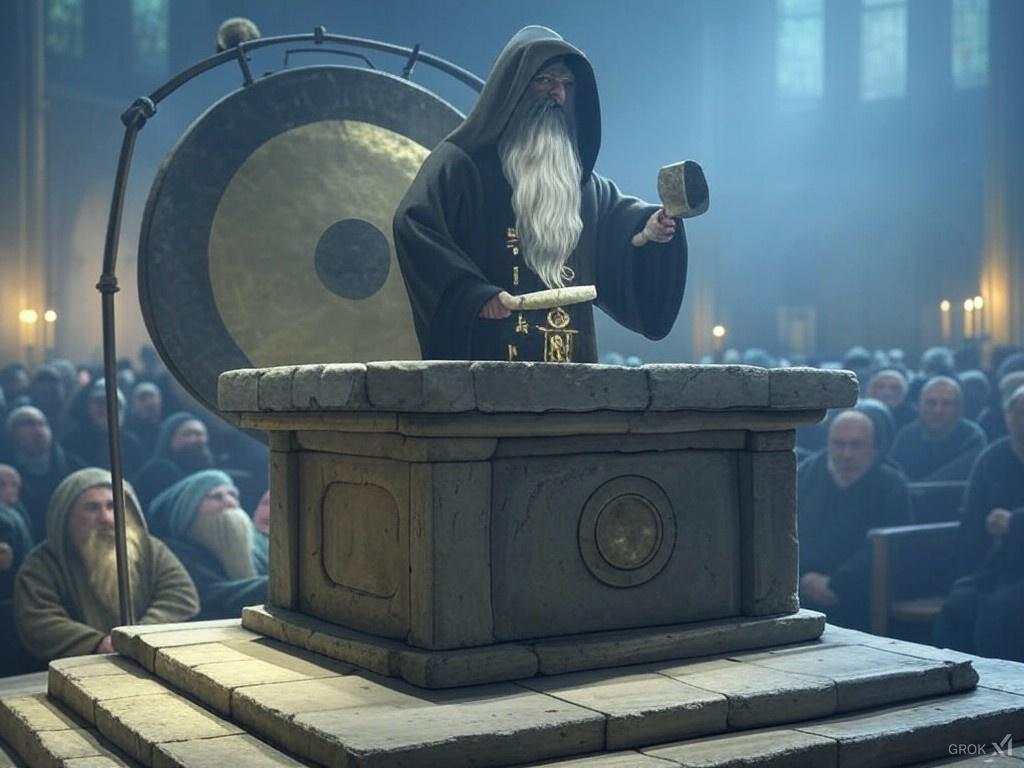
“FOR RHOKKI IS OUR GOD!” Hackor and the people boomed in reply – finally ending the service, and opening the door for Hacktor to step forward into his destiny – the destiny I had created for him!
 The Apocrypha of Azazel