Part III: Greed is Good
Chapter 2: The Magnificent Seven
For our purposes a few more words about the turncoats will suffice. The Rukstinz clan was the richest and most ruthless of the bunch. For centuries they’d partnered with the Derkka in numerous business ventures – slavery, the nefarious Skin Trade, and of course control of The Blackwoods. Uber wealthy, the Ruks became the de facto ‘banking’ class of the Drokka and, over time, the owners of most of the land in the Drokka kingdoms of Oz, Duzarez, Rhokki Pass, and the far away Akka mountains.
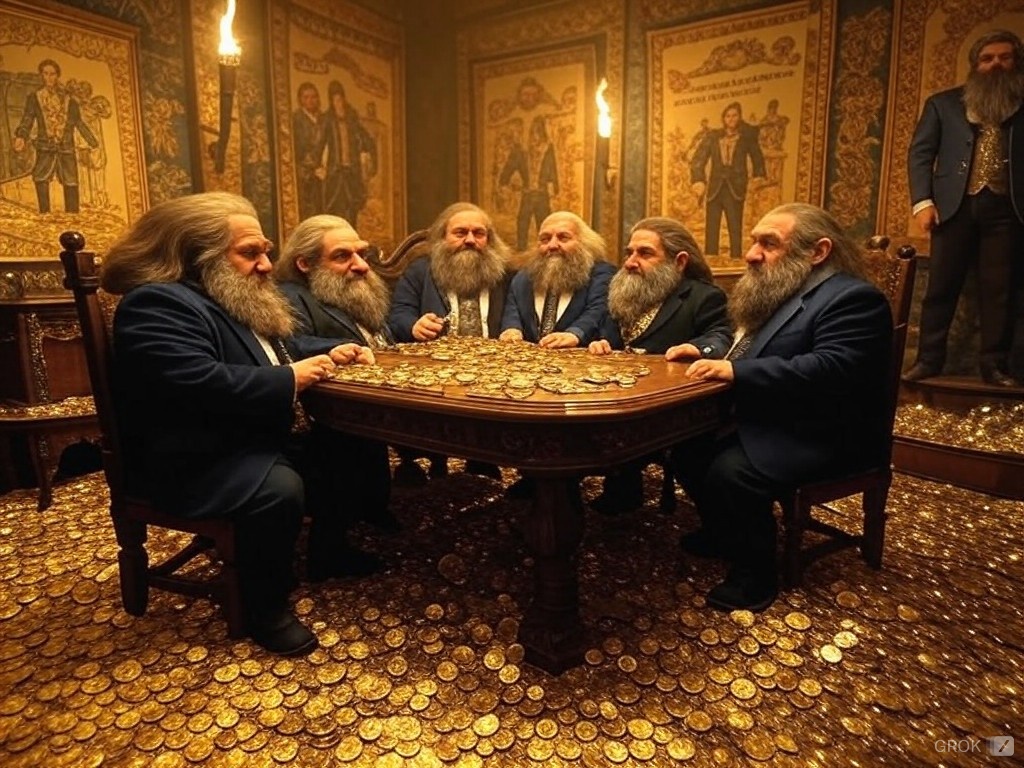
While numerous Kon-Herrs have come from their line, the ‘truth’ about the Rukstinz family is the most difficult to decipher because they preferred secrecy above all and have scrubbed much of their history from the records in order to remain free to control the future from the shadows.
The Gaatz were second in importance, but they trailed the Ruks by a long margin in terms of wealth and influence. Unlike the Ruks, the Gaatz preferred the limelight and valued public praise. They built much of the merchant class in Drokka society and their influence was wielded by their ability to control the economy via the merchant guilds. The Gaatz family also established the profession of the scribes and this allowed them to always have a minion at the king’s side. Additionally, since the scribes recorded the official records, controlling them helped the Gaatz ensure that history (in the form of the official Kroniklz) praised their name. Their home base was the region of Chaldea – where all scribes were required to be trained.
After serving as slave overseers for the Derkka, the Busz family maintained their ties with the Derkka and played those connections to build a military industrial machine that used war to create wealth for the elites of both sides. Anything related to war had ties to this family and they used that influence to install numerous Kon-Herrs into power.
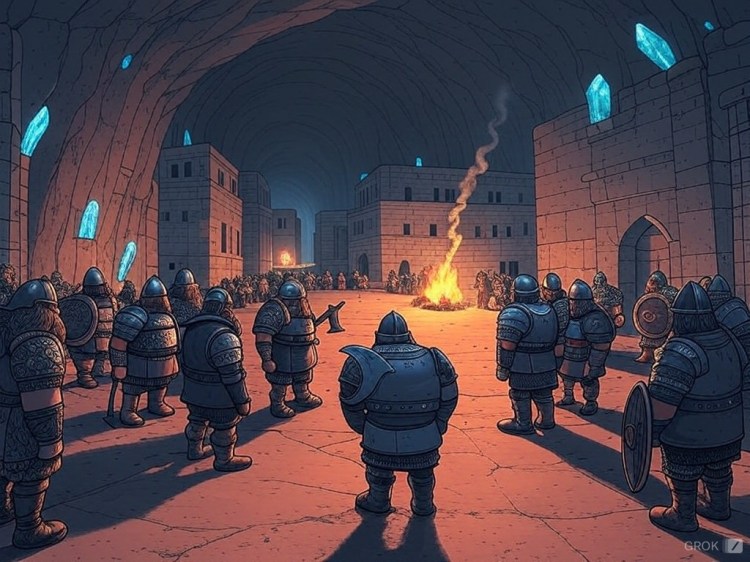
They founded the city of Kel-de-Kaba (famous for its weapons manufacturing) and viciously guarded that home base. Their clan’s influence ran deep and prominent branches included the Strongbows, the Vendals, the Fastuz, the Skemerz, and the Derkillez (i.e. Hacktor’s line).
I’ve mentioned the Naves in the past – this was the clan I used to help establish the theology of the Drokka faith and the worship of Rhokki among a pantheon of gods. The Naves became the priestly class of Drokka society and they used religion to become wealthy.
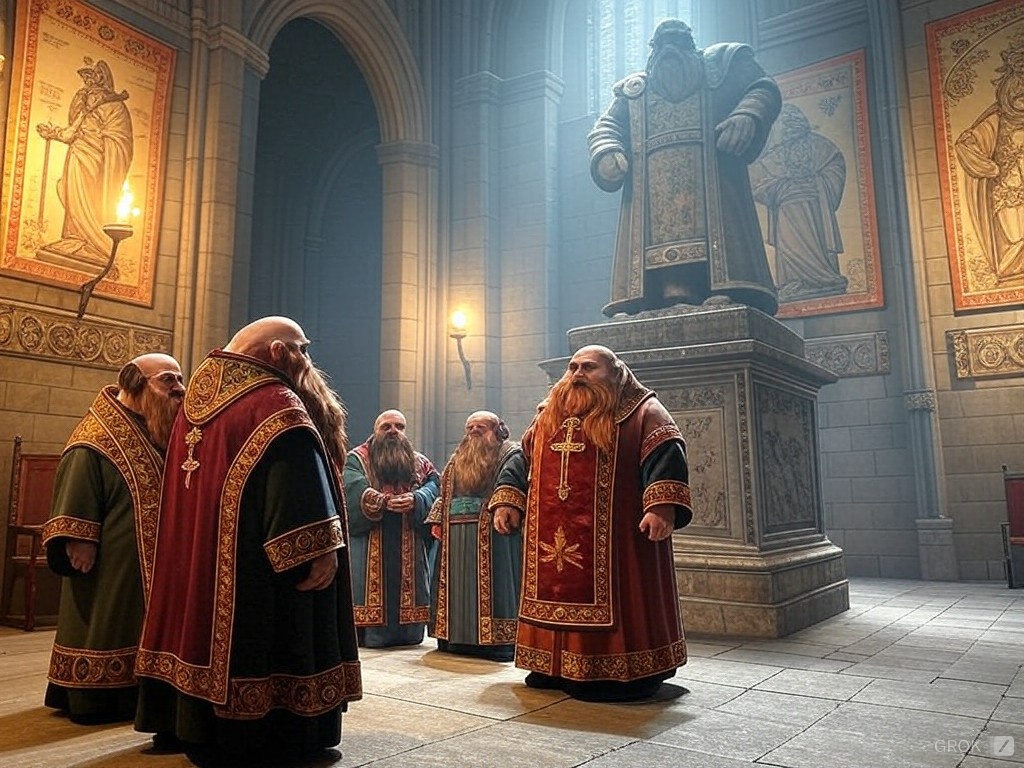
They controlled the city of Iztak and spent much of their time creating (and breaking) alliances with the Ruks, Gaatz, and Busz families in order to help themselves advance up the political food chain.
Farther down the totem pole were the Bomas and the Klyntz. Mainly courtiers who played the political game to achieve wealth and status, each clan had a Kon-Herr from their line. The Klyntz didn’t control any specific regions themselves, but they had a network of familial ties that infiltrated all the major metropolises from which they ran various fake charitable organizations that preyed on the lower classes in order to enrich themselves. As for the Bomas, they founded Gaza – a region on the southwest side of the mountains that had more of its lands in The World Above and whose prominent buildings all faced Babel – which allowed the Bomas to enjoy the sight of the Derkka capital they secretly wished they’d never left.
Finally, there was the Kyndyz clan – a mysterious bunch that masterfully played the political game (often at the expense of their bitter rivals the Bomas and Klyntz). They founded the region of Al-Uzza. Unlike the rest of the ancients, the Kyndyz often advocated public policy that was designed to help the common Drokka on many occasions – because of this their rivals tried to destroy them over the years.
Why were these elite families important? Because although the Drokka had their share of royals – to include a king called a ‘Kon-Herr’ – that monarch (who served as the de facto ruler of the people and the face of the kingdom) was in fact a pawn of the elites. This control dated back to the very first Kon-Herr – Ajax himself – who, although he led his people to freedom, was forced to rely on the turncoat families as the only source of ready capital that was sufficient to finance his costly wars against the Derkka.
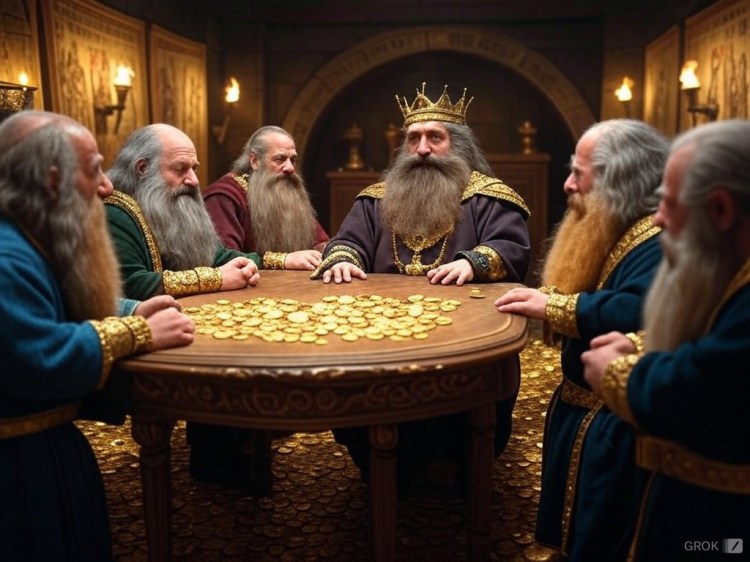
In exchange for lending Ajax the funds he needed, the Ruks and their ilk gained the rights to large swaths of land under the mountains – many of which included precious mines and other valuable resources – thus further helping these families to become fabulously wealthy at the expense of their Drokka brothers and forever giving them a hand in the political course of their people.
With this basic knowledge of the upper echelons of Drokka society complete, we can now move on.
 The Apocrypha of Azazel