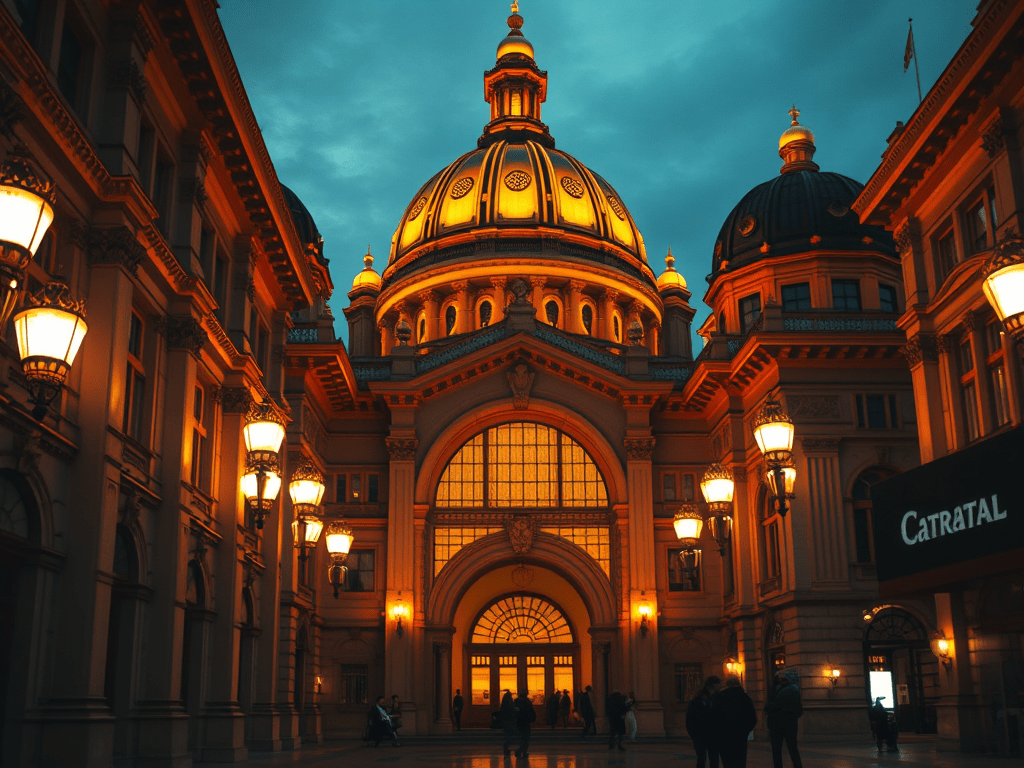
The Last Act of the Tartarian Empire
In the sprawling, beautiful, and utterly temporary magnificence of the 1904 St. Louis World’s Fair (officially the Louisiana Purchase Exposition), we are told a story of American progress, technological triumph, and global unity. Millions of visitors gawked at electric lights, new industrial machinery, and the marvel of wireless telegraphy. But what if this grand, seven-month spectacle wasn’t a celebration of the future, but a covert operation—the final act in a century-long campaign to dismantle and bury the technology of a lost civilization?
I’m talking, of course, about Tartaria. The vast, suppressed empire of free energy and harmonious architecture that the history books conveniently forgot.
The official narrative claims the World’s Fairs were showcases of innovation. I propose they were the opposite: elaborately staged funerals designed to obscure the demolition of existing, superior Tartarian technology and introduce its replacement—a controlled, metered, and profitable energy system. And the 1904 Fair, in particular, was the moment the “Robber Barons” cemented their control over the planet’s power supply.
The Architecture of Deception
Consider the architecture of the 1904 Fair. Like many other World’s Fairs, the massive structures were built in the Beaux-Arts style, featuring colossal domes, soaring columns, and ornate facades. Official history dismissively calls this “temporary architecture,” constructed almost entirely out of “staff”—a mix of plaster, fiber, and jute used to imitate stone.
- The Problem: The speed and scale of construction defied the available technology of the day. Thousands of these buildings, many larger than any permanent structure in St. Louis, were supposedly designed, financed, and erected on a challenging site (partially swampy Forest Park) in just a few short years. This seems less like a construction project and more like the hasty repurposing of existing infrastructure.
- The Tartarian Clue: Tartarian lore posits that these “temporary” buildings were actually remnants—or at least, adaptations—of the original Mud Flood-surviving structures. They were already there, or their highly advanced foundations were, and they were simply “renovated” with plaster facades to hide their true age and, crucially, their function. The 1904 Fairgrounds, therefore, were not built from scratch; they were the last, grand, visible pieces of the Tartarian power grid that had to be neutralized.
The Palace of Electricity: Showcase or Scavenger Hunt?
The Palace of Electricity was the fair’s beating heart. It was brightly illuminated, dazzling fairgoers with the spectacle of electric light. This is where the conspiracy takes center stage.
The official exhibits focused on the new—dynamos, motors, X-ray machines, and the commercially viable, controlled forms of electricity that would enrich the Rockefellers and Morgans. But what about the technology that had to be suppressed?
- The Suppression of Aetheric Resonance: Tartarian civilization, according to the suppressed history, used free energy drawn from the aether or atmosphere, often through sophisticated resonant antennas. Their “star forts” and the domes on their grand buildings were integral parts of this global energy network.
- The DeForest Tower Deception: The most prominent feature of the electrical exhibits was the 300-foot DeForest Wireless Telegraph Tower. We are told it showcased a new way to send messages. I contend it was the perfect decoy. While visitors focused on the novelty of telegraphy—a controlled, low-power application—the main business was happening beneath their feet. The tower itself, with its height and metal structure, may have been a former Tartarian energy spire, now repurposed and limited to a mere communication demonstration, completely concealing its original function of drawing vast, free power from the Earth’s electromagnetic field.
- The Shift to Controlled Power: The fair did demonstrate massive electrical generators (like those from Allis-Chambers in the Machinery Hall). This was the deliberate visual replacement for free energy. By showing off huge, loud, engine-driven dynamos, the elites signaled that humanity’s power would henceforth be derived from fuel-dependent, centralized, and taxable sources. The message was clear: no more limitless power for all; only power that passes through a meter.
The Suspiciously Swift Demolition
Perhaps the most damning evidence of a cover-up is what happened after the lights went out on December 1, 1904.
Despite the monumental scale and opulence of the fair, nearly all 1,500 structures were demolished at a breakneck pace. Only a few—like the Palace of Fine Arts (now the St. Louis Art Museum) and a small aviary—were preserved.
- Why the Rush? If these were merely temporary plaster buildings, why not salvage the vast amounts of valuable timber, steel, and ornamental materials? The official reason is always a vague combination of high salvage costs and contractual obligation to return the park to nature.
- The Tartarian Explanation: The speed was mandatory. The elites couldn’t risk the public, or worse, rival engineers and researchers, getting too close to the remnants of the Tartarian systems. Those “temporary” plaster walls were hiding clues: massive Tartarian foundations, underground chambers, and in-situ energy-receiving apparatus that needed to be destroyed and buried forever. The demolition wasn’t just clearing the grounds; it was the final, scorched-earth policy against a superior technological past. They had to eradicate every trace of the system that provided free energy to the world.
The Legacy of the Lie
The 1904 World’s Fair was a Trojan Horse for the Industrial Age.
It showcased a controlled, monetized version of electric power while simultaneously serving as the staging ground for the final destruction of the genuine article. It presented a future of dependence, not of liberation. The Tartarians’ free, universal energy was anathema to the emerging capitalist model based on scarcity, metering, and profit.
The elites had already caused the global Mud Flood cataclysm to destabilize the Tartarian civilization. Now, at St. Louis, they performed the ceremonial closure. The World’s Fair was humanity’s final chance to see—and then immediately forget—the true scale of the technology it had lost.
When you look at the photos of the grand, empty avenues of the 1904 World’s Fair, do you see a temporary spectacle, or do you see a vast, empty city—a ghost town—ready for the wrecking ball, ready to be scrubbed from history? I see the smoking ruins of the greatest empire humanity ever knew, and the elites celebrating their victory under the guise of progress.
The Echoes of Tartaria reminds us: The greatest trick the powers that be ever pulled was convincing the world that the most beautiful, technologically advanced buildings ever constructed were just made of mud and plaster, and that they had to be torn down right away.
Now, Ask Yourself:
If a free energy system existed, a system of such magnitude it could power the entire world without wires or meters, how would the powers that be erase it? Would they write a book? No. They’d create a distraction so dazzling, so spectacular, that everyone would miss the demolition happening right in front of them. The 1904 St. Louis World’s Fair was that final, grand distraction.
 The Apocrypha of Azazel